
← MCC Teaching Library · 英文教材庫
Intermediate Reading · Book 6 · 中級閱讀
Intermediate Reading — 第六冊
Each lesson: picture → read the text (human recording) → comprehension → words & phrases → quick quiz.
每課:看圖 → 讀文章(真人朗讀)→ 閱讀理解 → 生字片語 → 小測驗。
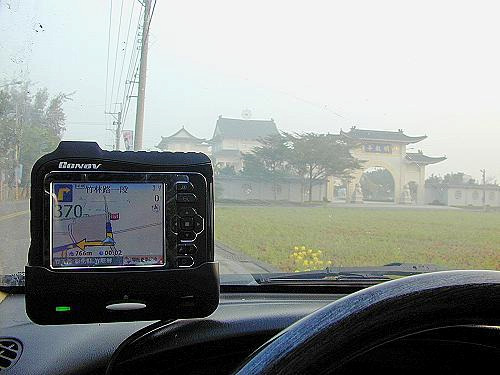
"Oh, no!" Luke cries. "I'm lost again."
He pulls over to the side of the road and puts the car in park, trying to hold back the tears. He gets out of the car and looks around, hoping to see something familiar, but he has no idea where he is.
"This seems to happen to me a lot," he mutters to himself. "Thank god my wife bought me a GPS for my birthday!"
He switches the dash-mounted GPS on and waits for it to get a signal. It responds with a beep to let him know that it is ready for use. He then browses the onscreen menus until he finds his destination. A map of the area comes up and he uses the pointer to select the exact address that he is trying to find. Now that the GPS is programmed, it will lead him right to where he wants to go…the Ming Harng Temple.
An arrow flashes on the screen showing him which way to go. Sometimes the machine even beeps when he needs to turn.
A GPS, or Global Positioning System, uses satellites to communicate information to it. In order to calculate your whereabouts, the GPS needs to be connected to at least 3 satellites, but the more satellites it connects to, the more accurate the information that it provides will be.
A GPS can give you other information as well. It can tell you your altitude, speed, and even your ETA (estimated time of arrival). It can also be programmed to record coordinates that are important to you, like where you buried that body last summer.
Thanks to the wonder of modern technology, Luke finally sees the big temple off in the distance. For a man who has spent most of his life lost and in the dark, the GPS is a godsend. Never will he waver off course again.
Questions · 閱讀理解
Why does Luke pull over to the side of the road?
What does Luke use to find his destination?
What information can a GPS provide?
Words & Phrases · 生字及片語
Quick Check · 小測驗
1. What does Luke's wife give him as a birthday present?
2. According to the passage, why does a GPS need to connect to at least 3 satellites?
3. What is Luke's final destination in the story?
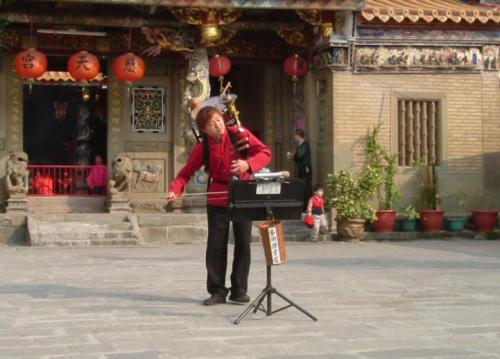
One day, a man stood outside a temple playing a strange musical instrument. He played non-stop for quite some time and even played when no one was there to listen.
Passersby had mixed reactions to his playing. Some applauded, some simply smiled at him, but others frowned as if they thought he had no business in being there. One little boy took a special interest in the man. The boy watched and listened intently, as only a child could. He was fascinated by how the man could make such beautiful music come from the strange instrument. After some time, the young boy spoke to the musician, “Excuse me, sir. I am sorry to interrupt, but I was wondering what the instrument you are playing is called.”
“It’s an erhu,” the man told the boy.
“An er who. I’ve never heard of one of those before,” the boy admitted.
“Not an er ‘who’, it is an erhu,” the man calmly said to correct the boy.
“An er what?” the boy asked with a very confused look on his face.
“Erhu, erhu, erhu!” the man exclaimed. He waved his hand in the air in a ‘forget about it’ sort of way and then spoke slowly, “It’s a Chinese violin!”
“Why didn’t you just say that in the first place,” the boy asked.
“Because its real name is an erhu,” the man again explained.
“Huh!” The boy was confused again.
“Get out of here you little punk before I…” the man stopped, took a deep breath and started to play again. He closed his eyes and let his anger dissipate into the happy land of music. The boy continued to listen for a while, but then lost interest just as quickly as he had gained it. He skipped home and soon he could hear the erhu no more.
Questions · 閱讀理解
Where is the man performing?
What instrument is the man playing?
How do passersby react to the performance?
Words & Phrases · 生字及片語
Quick Check · 小測驗
1. Why did the man stop playing for a moment near the end of the story?
2. Why was the boy confused when the man first told him the name of the instrument?
3. What eventually happened to the boy's interest in the music?
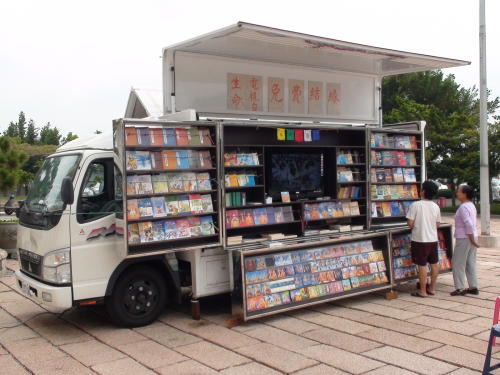
On their way home from school Guy and Jacque saw something very unusual. “What in the name of God is that?” Guy shouted with a thick French accent. He pointed toward something parked inside the local temple courtyard parking lot. “I am not sure,” Jacque replied with a puzzled look on his face. “I can’t see it very clearly from here.” “Oh yeah. I forgot that you are blind as a bat,” Guy, the older of the two, chuckled. “I’m not blind!” the portly Jacque defended.
“Whatever you say, Goggles,” Guy responded. “Let’s go take a closer look at that thing.” They casually strolled through the temple gates and into the courtyard. The strange thing was parked in front of the temple’s main building. But what was it? “It looks like some geek’s version of a Transformer,” Guy laughed. “Only instead of changing into a cool robot with special powers, it turns into a library on wheels with the power to put you to sleep in a flash,” Jacque added. They may not have admitted it, but it was a pretty neat cube van. The side flipped up and then doors/shelves swung outward revealing a veritable library on wheels. There was even a TV on it advertising some of their stuff. “Well as long as we are here, we might as well see what they’ve got.” Guy said and then sheepishly walked toward the bookmobile. He didn’t want his friend to know that he liked reading. That would ruin his reputation. “Yeah,” Jacque followed, “as long as we’re here.” They spent the rest of the afternoon browsing through the books on the “un-cool” bookmobile.
Questions · 閱讀理解
What unusual thing do Guy and Jacque see?
Why is the library called a library on wheels?
What do the boys decide to do in the end?
Words & Phrases · 生字及片語
Quick Check · 小測驗
1. Why does Guy tease Jacque by calling him "blind as a bat"?
2. What comparison does Guy make when describing how the van changes shape?
3. Why does Guy walk toward the bookmobile sheepishly?
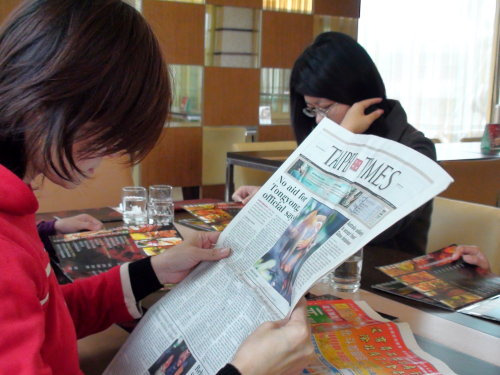
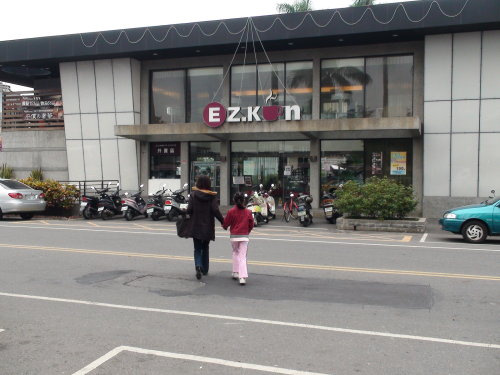
Julie's cell phone rings and wakes her from a deep sleep. She rolls over in bed and picks it up. “Hello,” she says in a groggy voice suggesting that she is still half asleep. “Good morning Sunshine!” the lady on the other end cheerfully says. “Wakie, wakie, sleepy head.” “Oh, Susan,” Julie says as her brain finally starts functioning and it clicks in who she is talking to. “Are we still on for coffee this morning or are you too tired?” Susan asks. “Of course,” Julie replies as she climbs out of bed. “Give me fifteen minutes to put my face on and look presentable.” Susan and her daughter, Sophia, go out for coffee with Julie at least once a week. It gives them a chance to catch up on the week’s gossip. A small gray car parks across the street from the EZ coffee shop in Beido. Young Sophia gets out the passenger side and walks around the car to where her mother is. The two of them cross the road together and enter the busy coffee shop. The place is bustling and they have to wait a few minutes for a seat, but soon they are shown to their table. While the girls wait for Julie to drag herself out of bed, they browse the menu to see what looks good. “Hey, guys!” a cheerful voice greets them from behind. “Are you waiting for someone?”
Susan, half startled, turns to see Julie walking toward their table. “Well…look who finally showed up,” Susan responds with a hint of sarcasm. “Sorry I’m late,” Julie says apologetically. “I had to drop my Doraemon collection off at the babysitter.”
“I am sure they would have been safe in your car.” Susan states while shaking her head at Julie's absurdity. “You can never be too safe,” Julie says, trying to convince everyone that it was a good idea. “I heard that there was a cat burglar in the neighborhood.” “You know that a cat burglar doesn't really steal…oh, never mind.” Susan stops herself. She knows there is no convincing Julie about anything when it comes to her Doraemon collection.
Questions · 閱讀理解
Why is Julie late?
What is Julie worried about?
How does Susan react to Julie's explanation?
Words & Phrases · 生字及片語
Quick Check · 小測驗
1. What does Susan do every week with Julie?
2. Where does Sophia sit in the car on the way to the coffee shop?
3. Why does Susan stop herself from finishing her sentence about the cat burglar?
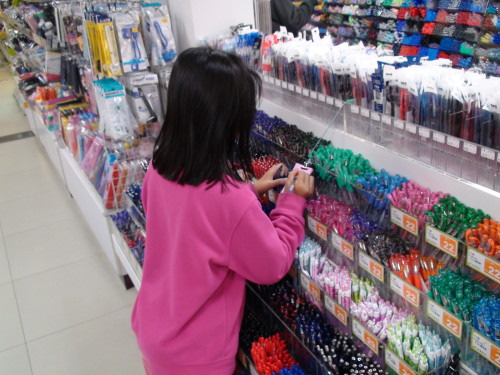
Once, there was a little girl named Wendy. She was a very good girl because she always did her homework and helped around the house. She was her mother's little angel. But like everyone, Wendy wasn't perfect. For some reason, she was always losing her pens and pencils. She just couldn't keep track of them no matter how hard she tried. It was as if they were disappearing into thin air. One day, her teacher, Mrs. Martin, got angry because Wendy was always bothering other students to ask them for something to write with. Mrs. Martin had had enough. She took a pencil out of her desk, tied a piece of string around it and then loosely secured it to Wendy's wrist. “Let's see you lose it now,” Mrs. Martin said proudly, as if she had solved a great problem. Five minutes later, Wendy slowly walked up to her teacher's desk. “Um, Mrs. Martin.” she said politely. “Yes, Wendy. What is it?” Mrs. Martin asked. “I seem to have lost my pencil again,” she shyly admitted. Her teacher was confused. She looked at Wendy's wrist and the string was still there, but as she pulled it up she could see that there was nothing on the end. Mrs. Martin was completely and utterly baffled. “What did you do with it?” Mrs. Martin inquired. “Did you eat it or something?”
“It’s just gone,” Wendy stated. They searched all around Wendy's desk the same way an investigator might go over a crime scene, but they found nothing. There seemed to be no trace of it. The search was then expanded to cover the entire classroom. Every nook and cranny was looked into and nothing was left unturned, but the pencil was nowhere to be found. “Well, I don't know what to say Wendy,” Mrs. Martin confessed. “Short of putting a homing device on your pencil, there is really nothing more I can do.” “But how can I do my work?” Wendy whined. “I need something to write with. “Ok then. Here is 10, 000 dollars. Take it and go to the stationary store around the corner and buy every pen and pencil they have in the place. It may not keep your pencils from disappearing, but, if we have enough, it might at least get you through the rest of the semester,” Mrs. Martin explained. “And then?” Wendy wondered. “And then!” Mrs. Martin cackled like an old witch. “And then you are out of my hair and your next teacher can worry about it!” Everyone in the classroom roared with laughter.
Questions · 閱讀理解
What problem does Wendy often have?
How do people search for Wendy's pen?
Why is the situation funny?
Words & Phrases · 生字及片語
Quick Check · 小測驗
1. Why does Mrs. Martin tie the pencil to Wendy's wrist with a string?
2. What does Mrs. Martin discover when she pulls up the string on Wendy's wrist?
3. What is Mrs. Martin's final solution to Wendy's problem?
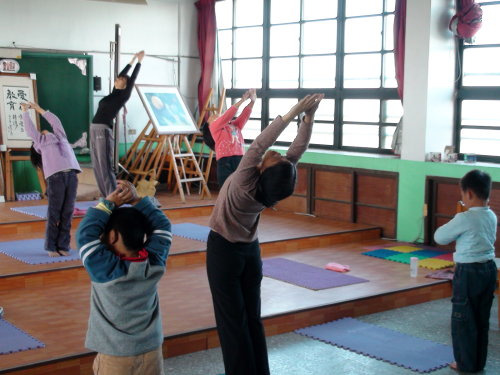
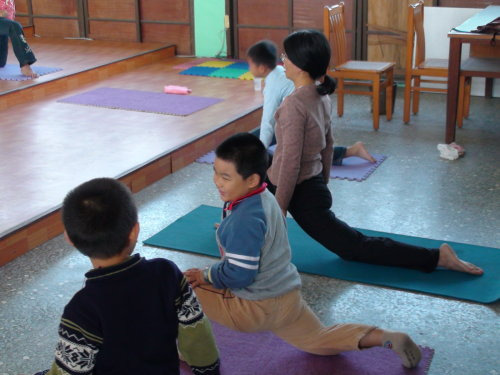
“Hey, Robert, do you want to come to yoga class with me,” Henrik politely asked his good friend. “Yogurt class? What the heck is that?” Robert was confused. He imagined people sitting around a classroom, eating yogurt together. “Not ‘yogurt’, yoga! Y-O-G-A, yoga,” he corrected Robert. “Why are people always confusing yogurt with yoga?” The question was rhetorical, but Robert answered anyway. “I have no idea,” Robert admitted. “So tell me, what is yogurt…I mean yoga, anyway?” “You’ll have to come with me and find out.”
Henrik and Robert entered the activity room at their elementary school. They were a bit late and class was already in session. The two boys found an empty spot near the front of the class and joined in. “Just do what I do,” Henrik whispered to Robert. “And don’t worry about looking stupid. No one here will judge you.” Robert followed Henrik’s every move as closely as he could. He wasn’t nearly as limber as his friend, but he tried his best to emulate each movement. All of a sudden, there was loud ripping noise. Everyone stopped what he or she was doing and looked around to see where the noise had come from.
Robert’s face turned beet-red as he realized that the entire class was staring directly at him and his bare bottom. When the poor boy had tried to lunge forward like Henrik, the seam in the back of his pants gave way. The tear went all the way from the belt line to his crotch, leaving his backside exposed. It was like his worst nightmare had become a reality. Later that night he was able to laugh about it as he told the story to his father. It could have been worse, he thought, at least no cute girls were there to see it. You can bet the next time he decides to join his friend for yoga—if there is a next time—he will be wearing pants that are a little stretchier. It would also be the last time that he would leave the house without wearing any underwear.
Questions · 閱讀理解
What word does Robert misunderstand?
Where do Henrik and Robert join the class?
What embarrassing thing happens to Robert?
Words & Phrases · 生字及片語
Quick Check · 小測驗
1. Why is Robert confused at the beginning of the story?
2. What happens right before Robert hears the loud ripping noise?
3. According to the story, what will Robert do differently next time he goes to yoga?
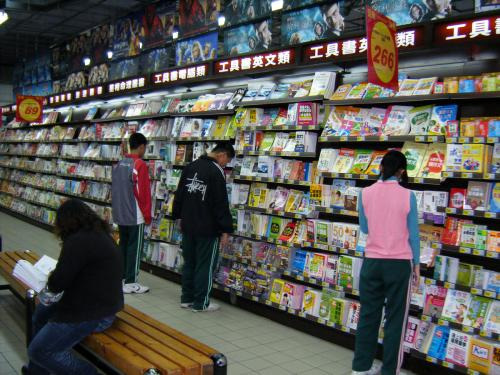
RT-Mart has an excellent book section located on the second floor. They have a lot of bestsellers and other popular titles at really reasonable prices. I go there quite a bit because I am a bookworm and am always looking for something new to read. The books there are displayed on shelves that go up about 8 feet along the wall. I can't reach the books on the top shelf, but if I ask a salesperson, they’ll bring out a stepstool and get it down for me. The staff is nice to me because they know that I buy a lot of books from their store. The books are organized alphabetically by author and put into categories. There is a fiction, a non-fiction, a children's and an educational section. They also have a lot of magazines and comics. As well, you can get school supplies there. Though the books are for sale, many people seem to think that it is a library. The freeloaders sit on the benches in the middle of the aisle and read books for free. I think it is okay to peruse a book to see if you like it, but reading it with no intention of forking out any cash is another thing altogether. It’s really not fair to customers who expect to buy new books, not books that have been partially read by someone that is too cheap to actually pay for it.
I guess that is why some bookstores in Taiwan have to put plastic wrap around their books and magazines. But this only prevents honest customers from being able to preview books. If I had a bookstore of my own, I certainly wouldn't tolerate non-paying customers lounging around reading my books. I bet if these kinds of people tried sitting around a clothing store wearing stuff they hadn't paid for, they would get their stingy butts kicked out on the street. Or how about sitting on the floor in a bakery sampling everything? Not likely they would last long there, either. So why should a bookstore be any different? In my opinion, it shouldn’t.
Questions · 閱讀理解
Where is the book section described in the passage?
Why does the narrator often go there?
Why does the narrator compare bookstores and libraries?
Words & Phrases · 生字及片語
Quick Check · 小測驗
1. According to the passage, how are the books in the bookstore organized?
2. What does the narrator say happens when a customer cannot reach a book on the top shelf?
3. Why have some bookstores in Taiwan started wrapping books and magazines in plastic?
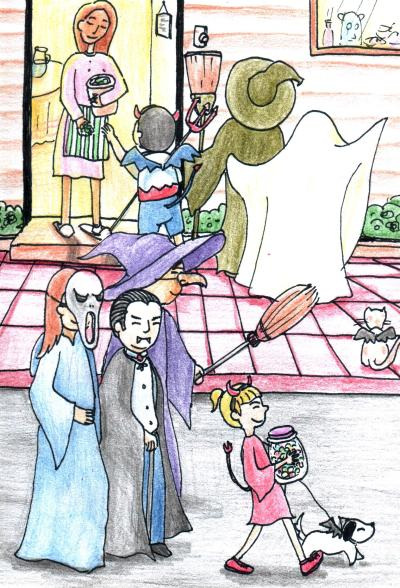
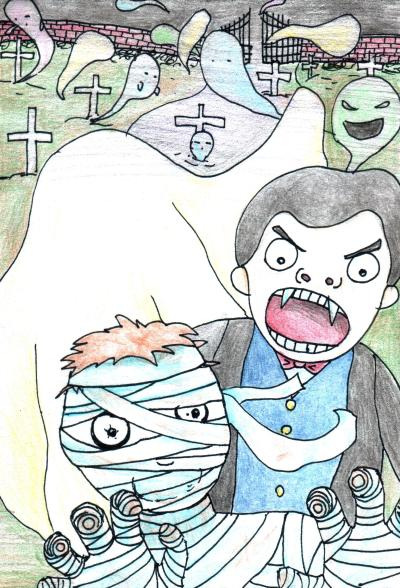
Halloween is a time for ghosts, ghouls, vampires, skeletons and things that go bump in the night. The dead come to life, mummies walk the streets and witches fly through the air on brooms. Cemeteries fill with howls and screeches as zombies crawl from their shallow graves. Halloween night is the most haunting night of the year, unless, of course, you are a child. Children love Halloween. They can dress up as their favorite creature, person, or even thing. Some make their own costumes out of old clothes in the attic, while others take the easy route and buy them at the store. Many even paint their faces and wear wigs to really try and fool people into thinking they are someone else. Though a lot of the fun is in dressing up and acting out, kids mostly do it for the free candy. Not only do they get to goof off for a night and walk the streets till the late hours, but also they get rewarded for doing so by receiving free candy. Some people make the children sing a song or tell a joke to get a treat, but most of the time a simple "trick or treat" will do. Although it is a lot of fun for the kids, it is the parents who have to put up with the sugar-induced fit the children might throw when they are told to go to bed. The teachers will have to tolerate hyperactive kids, too, until their stash runs out. But the real nightmare is left for just one person…the dentist!
Questions · 閱讀理解
What kinds of creatures are associated with Halloween?
Why do children enjoy Halloween?
Who has to deal with the real nightmare after Halloween?
Words & Phrases · 生字及片語
Quick Check · 小測驗
1. According to the passage, why do most children dress up for Halloween?
2. What do some people ask children to do before giving them a treat?
3. Who does the passage say faces the 'real nightmare' after Halloween?
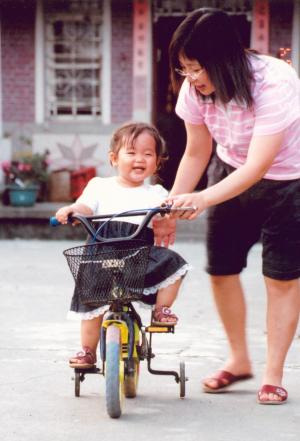
It was Trina's birthday. She was the happiest little girl in the world. Her parents had just given her the very thing she had longed for: a new bicycle. “Thank you so much, mommy and daddy,” the excited toddler screamed. “This is the best present ever and it even has a basket on the front for my dolls.” “You're welcome, Trina,” her mother said. “You are so well-behaved all the time that we decided to give you exactly what you asked for.” It was a beautiful sunny day outside and Trina immediately took advantage by taking her new bike out to the driveway so that she could try it out. She was so excited, but she still stopped for a moment to look at her old tricycle and reflect on the good times they had had together. It had been her best friend since she’d got it, but now that she was getting bigger the tiny tricycle was too small. The time for them to go their separate ways had come. In the driveway, she stood next to her bike, not quite sure what to do. Trina looked to her mother for help. “Can you help me on, mommy?” she politely asked. Her mother steadied the bike as she climbed on and sat comfortably with her hands on the handlebars and her feet on the pedals. “I’m a little afraid that I might fall over, so can you hold on to me for a while?” she nicely requested. “Of course I can, dear.” Her mother tried to assure her that there was nothing to be worried about. “This bike has training wheels. If you start to tip over, the little wheels on the back will prevent you from falling over.” Trina's mother walked alongside her for a while as Trina pedaled. She was a bit wobbly at first, but soon her mother wasn’t even holding on anymore; though, Trina was so excited to be riding her new bike she wasn’t even aware that she was doing it all by herself. Soon her mother stopped following altogether and just watched her little girl ride. “Look at me, mommy,” Trina yelled gleefully. “I’m so proud of you, Trina,” her mother told her. “You’re getting to be a big girl.” How fast they grow up, she thought. Trina continued to ride all afternoon until it was time to eat supper. Reluctantly she parked her bike next to the old tricycle, though this time she didn't even notice it. As she walked into the house, she gave both her parents a big hug. “You're the best parents ever,” she said sincerely. “You’ve made my birthday the most special birthday ever. Thanks.” Trina and her bike would create many happy moments together riding through the neighborhood and exploring the world around them. But eventually the tiny bike would find itself parked next to the old tricycle. Inevitably, she would outgrow it, too.
Questions · 閱讀理解
What present does Trina receive for her birthday?
Why is Trina so happy?
What will Trina and her bicycle do together?
Words & Phrases · 生字及片語
Quick Check · 小測驗
1. Why does Trina stop to look at her old tricycle in the driveway?
2. What does the training wheels feature on the bicycle do?
3. How does Trina's mother react as she watches Trina ride on her own?
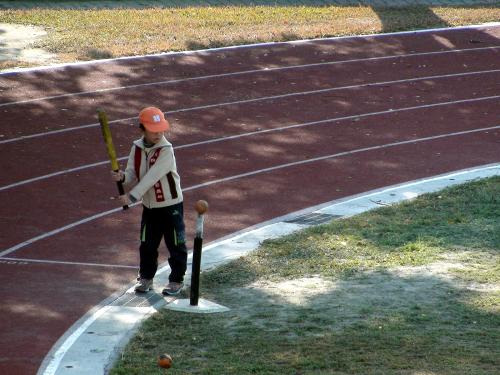
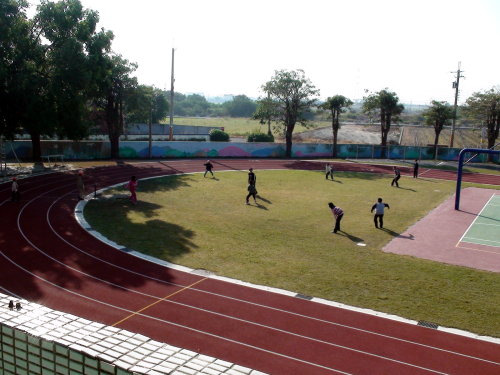
Young children have difficulty hitting a moving ball when they first learn how to play baseball. It is also hard to find a pitcher in this age group who can consistently throw the ball across the plate with any speed or accuracy—not to mention a catcher with enough coordination to catch a fast moving ball. Real baseball is just too difficult and a bit too dangerous for youngsters. To solve these problems, tee ball was created. Parents no longer had to fear that their six-year-old would be hit by a wild pitch and spectators no longer had to endure extremely boring games where hits were about as rare as a boiled potato in a Taiwanese restaurant. It also made the game a lot more enjoyable for kids who weren’t athletic enough to otherwise play. Tee ball is basically baseball where there is no pitching. Just like the real game there are 3 bases and a home plate. The positions are the same, too. There are 3 outfielders, 3 basemen, a short stop, a “pitcher” (he doesn’t actually pitch), and a catcher. Outfielders don’t tend to see a lot of action though because small children can’t hit the ball very far.
A large tee holds the ball in place at home plate. The tee can be moved up or down, depending on the height of the hitter, to make sure that the ball is always in his or her hitting zone. The ball is in play once it is struck and leaves the tee. At this point the game is played just like regular baseball. Even though the ball is motionless, it is surprising how many children still have a tough time hitting it. They often hit the tee itself and the ball just drops right to the ground. Organized tee ball leagues are quite common, but not overly competitive. Children usually start when they are 5 or 6 years old and play for 2 or so seasons. Once their skills have developed enough to play real baseball, they can move on. The game is good for developing fundamentals and learning the rules of baseball. Although some children may never make the cut on a real baseball team when they are finished, at least they’ve had the chance to have fun and get a taste of something that they might not have otherwise had the chance to.
Questions · 閱讀理解
Why is tee ball useful for young children?
How does the tee help the hitter?
What do children learn by playing tee ball?
Words & Phrases · 生字及片語
Quick Check · 小測驗
1. Why was tee ball created, according to the passage?
2. What happens once the ball is struck and leaves the tee?
3. According to the passage, why do outfielders in tee ball see little action?
*10 lessons in this booklet · 本冊共 10 課。