
← MCC Teaching Library · 英文教材庫
Intermediate Reading · Book 1 · 中級閱讀
Intermediate Reading — 第一冊
Each lesson: picture → read the text (human recording) → comprehension → words & phrases → quick quiz.
每課:看圖 → 讀文章(真人朗讀)→ 閱讀理解 → 生字片語 → 小測驗。
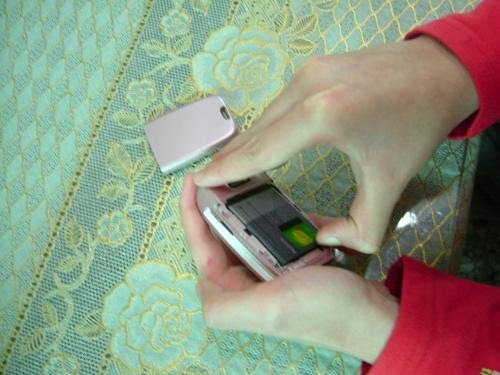
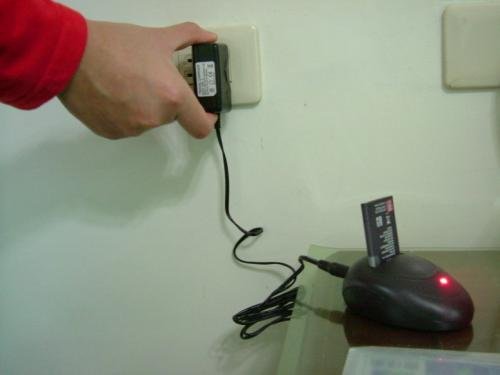
For most phones, charging is as easy as plugging it in. But for older models and spare batteries it can be a little different. They are usually charged with a stand-alone charger.
First remove the back plate to access the battery and gently lift it out. Then place the rechargeable battery into the charging dock. When you do this, make sure it is inserted correctly. An indicator light should come on to show that the battery is indeed charging. If the light doesn’t come on, check the plug and make sure the battery is inserted completely. If it still doesn’t come on, wiggling the battery might do the trick.
The charging process will take a while, so don’t stand around watching it. Just leave it alone and come back in a few hours. When you come back, the indicator light should be green if the battery is fully charged (Some models may flash or do something different to show that the battery is ready).
Remember, rechargeable batteries aren’t made to last forever. If your battery doesn’t last very long between charges, you may need to purchase a new one. Turning on your phone’s “power-saver” feature will help to lengthen the time between charges and prolong the life of the battery.
Questions · 閱讀理解
How are older models charged?
If your battery doesn’t last very long between charges, what should you do?
What can you turn on to lengthen the time between charges?
Words & Phrases · 生字及片語
Full teaching audio · 完整教學音檔
Quick Check · 小測驗
1. Why does the passage advise against watching the phone while it charges?
2. According to the passage, what should you check if the indicator light does not come on after inserting the battery?
3. What might some phone models do differently to show that a battery is fully charged?
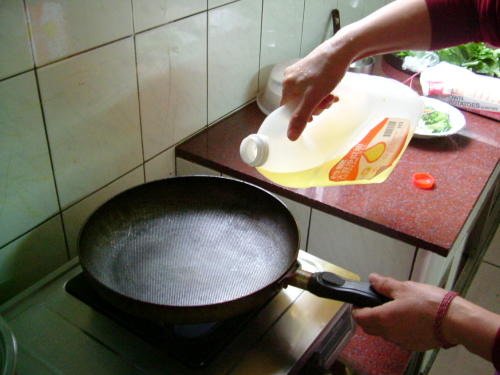
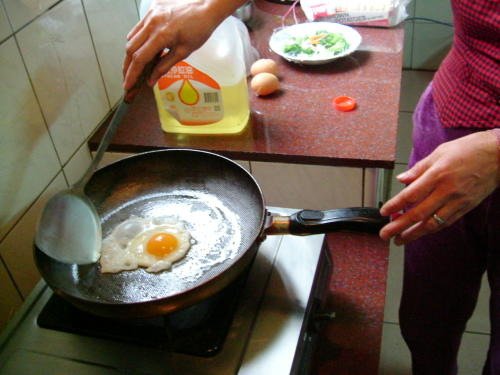
How do you fry an egg? Well, it is really quite easy and almost anyone should be able to do it. All you need to fry an egg is a frying pan, some cooking oil, a stove, a spatula and, of course, an egg.
Picture 1 First, turn the stove on to medium-high and pre-heat the pan. This is important because the egg will stick if the pan isn’t hot enough. When the pan is ready, you can pour some oil in. About a tablespoon or so of oil will be enough, as a light film is all you need. Do this carefully though, as hot oil can be very dangerous. You can substitute the oil with butter or margarine to give the eggs a nice flavor. You have to remember though that butter will burn at a lower heat than oil so you might need to turn the stove down a bit.
Picture 2 You can use the side of the pan or the countertop to crack the egg open. Lightly tap it on the edge of the pan and it will crack quite easily. Don’t hit it too hard or you might end up with egg everywhere. Once cracked, the shell can then be pulled apart. Place the contents of the egg in the hot oil. Don’t drop it in unless you want the yolk to break. Also, watch that the oil doesn’t spatter onto your hands or you’ll get burned.
Picture 3 A spatula is used to keep the egg white contained as it cooks and can also be used to flip the egg over. How long the egg is cooked is a matter of personal preference. Cooking the egg longer will yield a hard yolk, but a lot of people like runny yolks, in which case a shorter cooking period is needed. Once your egg is cooked to your liking, you can use the spatula to set it on a plate. And that’s it; your egg is ready to be eaten.
Questions · 閱讀理解
What do you need to fry an egg?
How do you crack the egg open?
How long should you cook the egg for?
Words & Phrases · 生字及片語
Full teaching audio · 完整教學音檔
Quick Check · 小測驗
1. According to the passage, why is it important to pre-heat the pan before adding oil?
2. Why does the passage suggest turning the stove down a bit when using butter instead of oil?
3. What determines whether someone should cook their egg for a shorter or longer time?
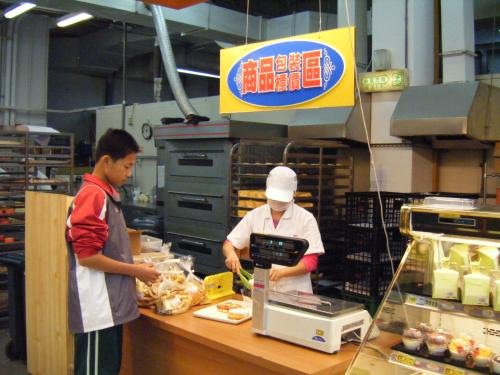
I was shopping at RT-Mart the other day with my mother. They have an awesome bakery there. It has all sorts of breads, cakes, and other treats. And you know it has to be good because it is made fresh every day. You can smell the sweet aroma of the bakery as soon as you walk through the door.
When I got to the bakery, I wasted no time in grabbing a tray and a pair of tongs. I went for the donuts first and put half a dozen of those sweet little babies on the tray. My next stop was the pie shelf because there is nothing better for a growing young man than two or three apple pies. After that, I loaded up with chocolate-chip cookies, jellyrolls, cream puffs and a few other things that are sinfully delicious.
At the checkout counter, the cashier looked a tad surprised to see me with my tray heaped high with goodies. I winked and said that it was for my grandma’s birthday party and that seemed to put her at ease. She sorted and boxed everything on the tray very quickly. Then she applied a price tag to each item.
After leaving the baking section, I set off to find my mom. I found her browsing around near the produce section. When she saw all the boxes of treats I was carrying, her eyes bugged out of her head and I thought she might faint.
“Well,” she began, “I guess you won’t be getting any allowance money this week.”
“That’s alright,” I said. “Donuts are better than money to me anyway.”
We both laughed and then continued our grocery shopping. I don’t think she was too upset about all the stuff I picked out, but I somehow get the feeling that she’ll be shopping at RT-Mart by herself next time. I’m pretty sure that I won’t be invited along anymore.
Questions · 閱讀理解
What does the boy use to pick up the donuts and what does he put them on?
What was the cashier’s reaction to the tray heaped with goodies?
How does his mother punish him for getting so much baking?
Words & Phrases · 生字及片語
Full teaching audio · 完整教學音檔
Quick Check · 小測驗
1. Why did the boy tell the cashier the treats were for his grandma's birthday party?
2. Where did the boy find his mother after leaving the bakery section?
3. What does the boy think will happen the next time his mother goes to RT-Mart?
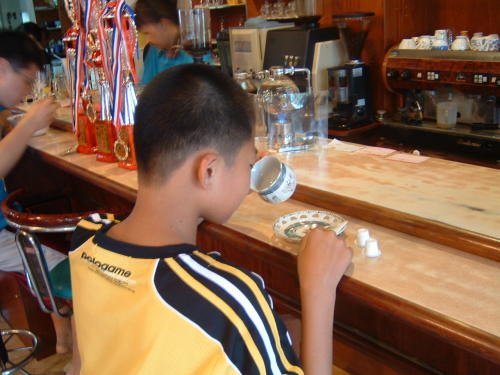
After a hard day at the office, Eric loves nothing more than to have a cup of coffee and ponder the events of the day. His usual hangout is the coffee house across from his office building. Every day he makes his way across the street, through the doors, orders an espresso and then perches himself up on a stool at the bar to wait. At this time of the day the coffee house is often bustling with patrons, but, thankfully, the service here is quick and Eric doesn’t usually have to wait long for his order.
In no time, Eric is enjoying a hot espresso, while thinking about the day. He is also trying to come up with a plan for tomorrow. He has always done this: think about what has happened and then plan for what is going to happen. Eric is just so organized.
His cup of espresso is now finished, just like his workday. Eric holds the tiny yellow cup up and looks inside, wondering where it all went so quickly and wishing there were more. He thinks about tomorrow’s cup; will it be as good, will it be as hot, and will it satisfy him or will he want more?
Eric stands and turns toward the door. The downtown lights now reflect in the window as the sun drops behind the concrete walls. He stops at the till and pays for his drink on his way out, feigning a smile to the cashier. As the door closes behind him, he looks back across the street to his office. Really, he wishes he could go back and finish up a few things, but he can’t, so he turns and walks along the string of streetlights into the darkness.
Questions · 閱讀理解
What does Eric love to have after work?
What does he do while he drinks his espresso?
Why does Eric like to plan?
Words & Phrases · 生字及片語
Full teaching audio · 完整教學音檔
Quick Check · 小測驗
1. Where is Eric's usual hangout located?
2. Why doesn't Eric usually have to wait long for his order, even when the coffee house is busy?
3. What does Eric do as he leaves the coffee house at the end of the passage?
“Good morning, children,” said Mr. Hooper, the principal of the Zun Liao Elementary School, as he greeted the grade 5 students.
“Good morning, Mr. Hooper,” the students replied in unison.
“I have a special treat for you today,” he announced. The children’s eyes lit up with the word “treat.” “Today we are going to learn how to bake sweet potatoes.”
“I love sweet potatoes,” a small boy in the back of the class spoke aloud. “They’re my favorite.”
The class ventured out to a field behind the school. There wasn’t much growing in it as the rice that had been there was already harvested. Stubble was the only reminder that a crop had in fact grown there at all.
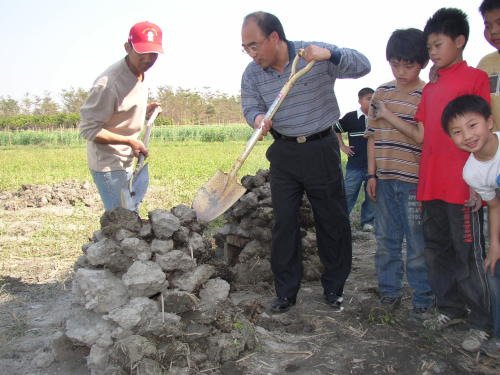
The school’s custodian, Mr. Finnegan, was already in the field when the students arrived. He was constructing two small ovens. He dug up big lumps of dirt and placed them over the top of each hearth that was made by stacking bricks together. When finished, they looked like little huts.
Charcoal and straw were then placed inside the openings of the makeshift ovens and lit on fire. The straw burnt quickly, but as it did the charcoal slowly began to burn and, after a while, glow red. The lumps of dirt above the fire gradually heated up, too.
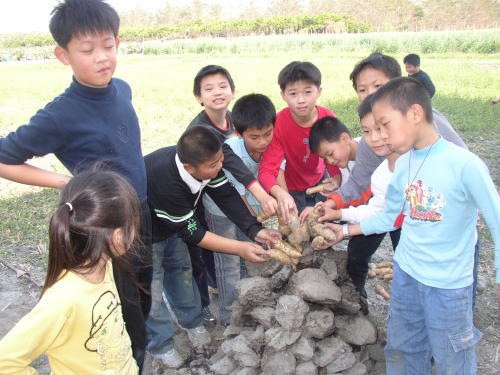
Mr. Hooper then told the students to carefully place their potatoes into the nooks and crannies between the lumps of dirt. When the children had all put their potatoes on the oven, they listened to the crackling of the fire and patiently waited for their sweet potatoes to be cooked.
After some time, the potatoes were ready to eat. Mr. Finnegan used tongs to take the cooked spuds out of the crevices; then handed them to the children. Their snacks were very hot. Many of the kids blew on them in an attempt to cool them off. Others couldn’t wait. They risked burning the roofs of their mouths by biting right in, but didn’t seem to care.
“Wow, this is so good. Thanks for bringing us out here and showing us how to bake sweet potatoes, Mr. Hooper,” the small boy again spoke, this time as a self-appointed ambassador for the entire class. “And thanks to you, too, Mr. Finnegan, for all your hard work.”
Everyone clapped and thanked them for their wonderful day.
Questions · 閱讀理解
Where were the ovens for the sweet potatoes made?
What were the ovens made of?
What was used to get the fire started?
Words & Phrases · 生字及片語
Full teaching audio · 完整教學音檔
Quick Check · 小測驗
1. Why was there not much growing in the field behind the school?
2. How did Mr. Finnegan get the ovens hot enough to cook the sweet potatoes?
3. Why did some of the children bite into their sweet potatoes right away despite the heat?
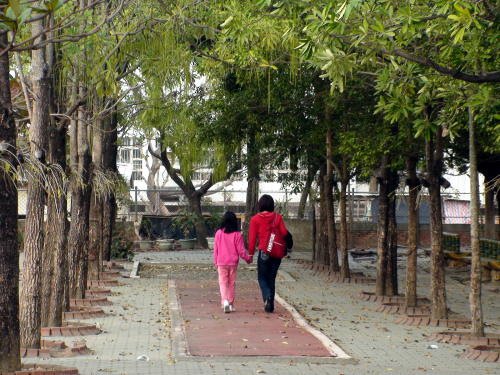
Melody and her mother were strolling through the park one Sunday afternoon. It was partially cloudy, but they didn’t mind as it blocked out the hot summer sun and made the temperature more tolerable. Trees that lined the brick walkway also offered shade and helped to cool things off even more.
“It is such a wonderful day for a day in the park,” Melody, who was no more than 10, spoke cheerfully. “Not too hot, not too cold, the weather is perfect for being outside.”
Joanne, her mother, took a deep breath of the fresh park air and then added, “And I’ve got a perfect daughter to share it with, too.”
The little girl giggled with slight embarrassment and then skipped ahead of her mother to see what she could see.
“Look Mom. They have swings!” Melody shouted excitedly as she ran for them.
“Wait up!” her mother yelled back and then tried to catch up with the anxious little girl.
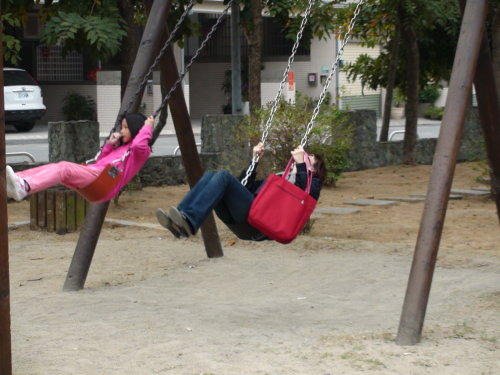
The swing set was very sturdy. It had been constructed out of heavy steel pipe. There were two swings hanging on chains from the crossbeam at the top. One set of chains had a black protective coating on it that prevented children from pinching their fingers between the links; Melody chose this one.
She climbed on the swing and walked backwards until she was on her tippy toes and then let go. As she swung down and forward, she leaned back and stretched out her feet to gain momentum. When she reached the top, she tucked her feet under her bottom and sat up straight again. Higher and higher she went.
“Be careful, Melody,” Joanne said.
Melody assured her that there was nothing to worry about and then she asked her mother to swing with her. Although Joanne hadn’t played on a swing set since she was a little girl like her daughter, she obliged. It felt a bit awkward at first, but after a while she got the “swing” of things. Melody and her mother spent the rest of the afternoon swinging happily away.
Questions · 閱讀理解
Why didn’t they mind that it was partially cloudy?
What was the little girl excited about?
How long had it been since Joanne had played on a swing set?
Words & Phrases · 生字及片語
Full teaching audio · 完整教學音檔
Quick Check · 小測驗
1. What made it easier for Melody and her mother to enjoy their walk despite the summer heat?
2. Why did Melody choose the swing with the black protective coating?
3. What did Melody do with her body to swing higher and higher?
Gina was digging through her pockets searching for change for the bus. But every time she pulled out her hand, she had nothing but a handful of crumpled up till receipts. There were so many that they were falling on the ground. It was annoying her.
“God!” she said out loud. “I hate these stupid receipts. I can never find anything in my pockets.”
Her friend, Carol, had been watching the whole ordeal and found it quite amusing.
“We go through this every time you need change,” she snickered as Gina knelt down to pick the receipts up off the sidewalk.
“I realize that,” Gina snapped, “but you can’t even buy a pack of gum these days without getting a stupid receipt with it."
“You don’t have to collect them if you aren’t going to check the lottery numbers on the front,” Gina’s longtime friend advised her.
“But there is never a garbage can nearby to throw them out,” Gina told her friend, “and I hate to litter.”
“Just do like me,” Carol suggested.
“And what do you do with them?” Gina curiously asked.
“I put them in a donation box,” Carol told her. “Most stores have one. That way the receipts are checked by volunteers and any money that is won goes to a charity.”
“I didn’t know that,” Gina admitted. “It’s a great idea. And it kills two birds with one stone: empty my cluttered pockets and help out a good cause at the same time.”
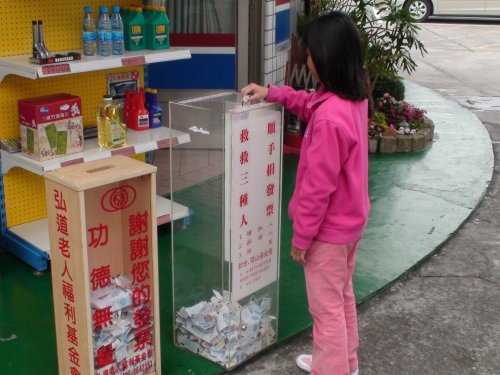
Gina looked around and soon found one of the boxes they had been talking about. She took all the receipts out of her pockets and put them through the slot on the top of the clear box.
“Good riddance!” Then she had a sudden realization: what if she had just given away 2 million dollars. Oh well! Easy come, easy go, she thought. As long as it ‘really’ goes to a good cause.
Questions · 閱讀理解
What were Gina’s pockets so full of that it annoyed her?
Why did she hate them so much?
Where did she finally put them?
Words & Phrases · 生字及片語
Full teaching audio · 完整教學音檔
Quick Check · 小測驗
1. Why was Gina having trouble finding change for the bus?
2. What does Carol do with her own receipts instead of throwing them away?
3. What worry crosses Gina's mind right after she drops her receipts into the box?
“Are you finished reviewing Lesson Six yet, Laura?” Ms. Townsend, her mother, asked.
“I am only halfway done,” Laura sniveled. “Can't I take a break for a while?”
“We both know what happens when you take a break,” Ms. Townsend reminded her daughter, “you will put it off until it is too late and then you’ll have to go to bed.”
“Just 5 minutes, please,” the whining girl pleaded. “I promise that I’ll get right back to it.”
“I’ve heard that one a hundred times before,” Laura’s mother laughed.
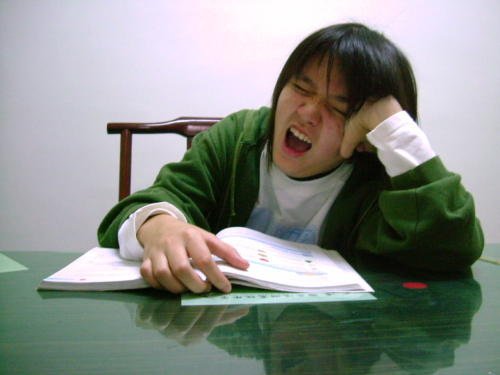
The poor girl put her elbow on the table and cradled the side of her head in the palm of her hand. She was trying to convince Ms. Townsend of her need for a rest. She even let out an overdramatic yawn, but to no avail as her mom only raised an eyebrow as if to say ‘Nice try.’ The performance hadn’t fooled anyone.
Realizing that she wasn’t going to get out of doing her homework, Laura settled back to studying. Her mother stood at the stove not far away to make sure that Laura was actually doing her work and not just doodling on a piece of paper.
Every few minutes Laura let out a deep sigh and peeked over to see if her mom had heard, but Ms. Townsend just shook her head and continued stirring a pot of soup. This woman is unflappable, Laura thought. She also wondered if her mother had a heart.
Some time later…
“I’m finished,” Laura announced.
“Good for you,” her mother said then sarcastically added, “It ONLY took you 3 hours to do about 20 minutes of homework.”
“Yeah, well,” Laura snapped. “It only took you 3 hours to cook instant noodles!”
“Actually,” her mother revealed, “I have only been stirring a pot of water with nothing inside. I just made it look like I was cooking. If I had left the room, you would have dillydallied all night and never finished your work.”
“Nice one, mom,” Laura said with a hint of betrayal in her voice. “Nice one.”
Questions · 閱讀理解
Why wouldn’t Ms. Townsend let Laura take a break?
What did Laura do to try and get out of doing homework?
Why did Laura’s mom pretend to cook?
Words & Phrases · 生字及片語
Full teaching audio · 完整教學音檔
Quick Check · 小測驗
1. What was Laura actually doing when her mother thought she might not be studying?
2. How did Ms. Townsend react to Laura's exaggerated yawn?
3. What was the twist revealed at the end of the story?
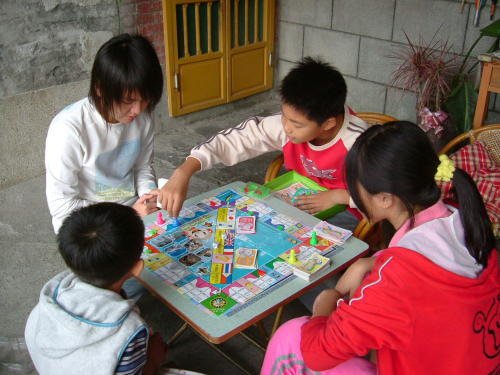
Four children sat around a small collapsible table playing Monopoly. The game board barely fit on the table and there was only a little room along the edge for the kids to put their Monopoly money.
There were two stacks of rectangular game cards, one red and one yellow, which sat in the center of the board. The children would draw from one of the stacks if they landed on a special square on the board. Some of the cards were good and might even result in some extra money, but others might force them to pay the bank or worse yet, go to jail.
Tony rolled the dice on the cluttered board and yelled, “Doubles! I get to go again.”
His older sister Mary cried, “You’re cheating. You are just making the rules up as you go along!”
“Get out the rules and read them for yourself if you think I’m lying, you crybaby,” he yelled back to her.
Mary grabbed the rulebook and thumbed through it page by page. When she reached the end and hadn’t found the rule, a confident smile grew on her face. She loved being right.
“I guess it will be my turn then,” she said dismissively, not even mentioning anything about there not being any rule. Still her tone served to rub his nose in the fact that he was wrong. The game continued on for a few rounds without much happening. The colored game pieces circled the board, money passed back and forth, properties were bought and everyone was having a good time. Then it happened.
“Aces!” Tony yelled. “Everybody has to pay me 1000 dollars.”
“You’ve got to be kidding?” Mary said in disgust with a look on her face that matched her voice.
“It’s in the rules,” he once again claimed.
“You know what?” she snarled. “I’m sick of playing with you and your stupid, nonexistent rules.”
With that said, Mary flipped over the board sending game tokens, money and the rest of the stuff flying into Tony’s lap. She’d had enough of his cheating. She would rather not play than to play with someone who doesn’t play fair.
“Does that mean the game is over?” Tony asked with a stunned look on his face.
“You’d better check the RULES,” Mary remarked as she walked away.
Questions · 閱讀理解
How would the children get to draw from one of the stacks of rectangular cards?
Why didn’t Mary like playing with Tony?
What did Mary do when she had finally had enough?
Words & Phrases · 生字及片語
Full teaching audio · 完整教學音檔
Quick Check · 小測驗
1. What did Tony do that made Mary accuse him of cheating?
2. What did Mary find when she checked the rulebook after Tony rolled doubles?
3. Why did Mary flip over the game board at the end?
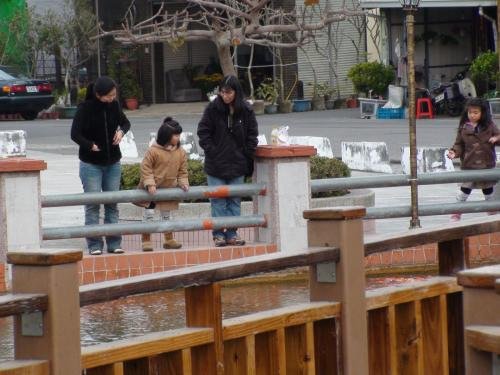
It had been a long, cold and rainy week in Taiboa. Come Saturday, the weather had finally let up a bit, even though it was still cloudy. Still it was the kind of day when you felt restless and needed to get outside. That’s exactly what Michelle, Jolene and Katrina did.
“Look,” Katrina said as she pointed to something in the water. “I think I see a fish.”
“Be careful,” her mother, Jolene, warned her and then beckoned her back from the edge. “Don’t lean on the rail or you might fall in.”
“But I saw a fish,” the little girl insisted.
“Of course you did,” her aunt Michelle said. “There are lots of fish here. Do you want to feed them?”
Katrina’s eyes lit up as if she had just won the lottery and she inquired excitedly, “We’re allowed to do that?”
“Sure we can. I’ve got some old bread crusts in my bag. I brought them along just for the fish,” her aunt informed her.
The three girls walked along the boardwalk until they found a spot they liked, where the water was cool and relatively deep. It was almost dead center in the middle of the pond and bound to be a good place to find lots of fish, so Kat tossed in a few crumbs.
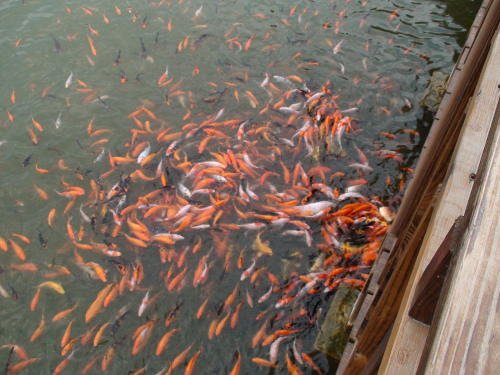
The bread barely had time to settle on the surface before a hungry goldfish gulped it down. Kat threw in more bread and it too quickly disappeared. Soon the water was boiling with fish writhing over top of one another to get at the food with their mouths opened wide. There were so many fish that Katrina thought she might be able to walk across the water on their backs.
“There must be a million fish here,” Katrina yelled in amazement.
“I don’t know about a million, but there are a lot of them that is for sure,” her aunt agreed. “A couple hundred at least.”
“Listen,” Jolene said, “I’ve got a few errands to run downtown, so why don’t you two stay here for the afternoon and I’ll meet you back at the house around 4 o’clock.”
Michelle looked to little Kat and asked, “What do you say? You want to spend the afternoon feeding the fish with me?”
Kat’s eyes lit up again like the sky on the fourth of July as she responded, “Do monkeys live in trees?”
The two of them spent the rest of the afternoon tossing breadcrumbs to the waiting fish. They chatted, laughed and had a wonderful time.
Questions · 閱讀理解
How had the weather been in Taiboa all week?
Why did her mother warn her to get back from the edge?
What was Katrina surprised that she was allowed to do?
Words & Phrases · 生字及片語
Full teaching audio · 完整教學音檔
Quick Check · 小測驗
1. Why did Katrina think there might be a million fish in the pond?
2. Why did Jolene leave Michelle and Katrina at the pond?
3. What does Katrina's reply, "Do monkeys live in trees?" mean in response to Michelle's question?
*10 lessons in this booklet · 本冊共 10 課。