
← MCC Teaching Library · 英文教材庫
Advanced Reading · Book 5 · 高級閱讀
Advanced Reading — 第五冊
Each lesson: picture → read the text (human recording) → words & phrases → quick quiz.
每課:看圖 → 讀文章(真人朗讀)→ 生字片語 → 小測驗。
Unit 1: Ming Harng Temple
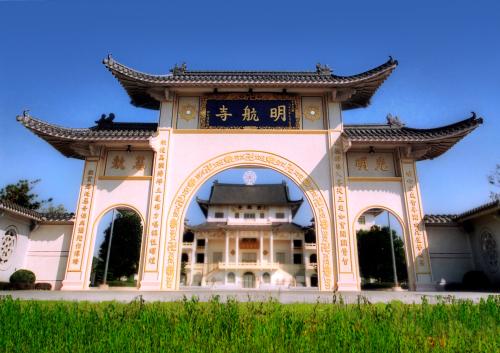
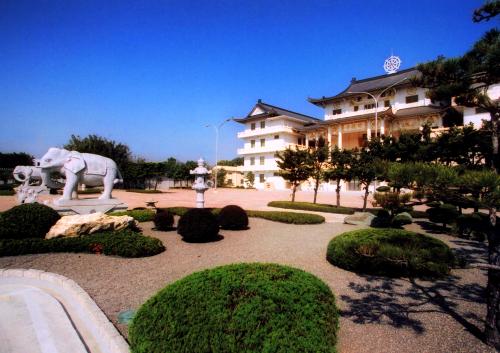
Jutang is a sleepy little village located near Beidou in Chunghua County. It is also home to my good friend, coworker and my medical advisor, Luke. Here you will not find congested roads, crowded markets, or skyscrapers dominating the scenery. What you will find are many open fields, seemingly empty streets, and friendly faces not so busy as to miss a chance to talk to a stranger. It is an unremarkable place, yet amongst the small simple buildings and the flat wet rice fields one thing does stick out and that is the Ming Harng Temple.
Jutang seems hardly the place for such a grand temple, yet here it stands. The sheer size of it seems disproportionately large for the sparsely populated community it services. Despite this, one thing about this spiritual structure fits Jutang to a tee: the quietness and the unobstructed simplicity.
The first thing I noticed about the temple was the simplicity of the design. Most temples in Taiwan seem to boggle the mind with symbolism. They contain painting after painting and sculpture after sculpture reflecting thousands of years of culture. The Ming Harng Temple is much different. The minimalist style welcomes you at the front gate without bewildering you and doesn’t try to dominate nor overwhelm you, but there is still enough to see and the architecture is undeniably Asian.
The courtyard is extraordinary. Finely manicured shrubs, trees and plants fill gardens covered with shale. Two bulky elephant statues peer out through the main gate as if guarding the sacred land. The area really foreshadows the serenity that one will find inside the peaceful temple. I can imagine myself being quite content in such a courtyard, resting under a tree and reading a wonderful story about a romantic civilization from long ago.
The building itself is very symmetrical just like the gates at the front. There is a large central structure with two smaller ones on either side. The plainness here accentuates the practicality of the building and gives hint to the sincerity and honesty of those who reside here. The actual temple is located in the heart of the building. The room is vast and on both sides are large foyers leading to other parts of the building. The nuns that live in the abbey look after this massive place. It must be a lot of work. Ground maintenance alone would be an ongoing battle, not to mention all the cleaning that would need to be done on a daily basis inside the main building. But for someone that has devoted his or her life to Buddha, it must be a labor of love.
I was lucky enough on my visit to the temple to be invited to have lunch with the nuns. They greeted me with big smiles and their hands held together similar to how Christians would pray. Vegetarian food was laid out on a long table in a buffet sort of style. Luke handed me a bowl and told me to dig in. There were all sorts of wonderful foods prepared here by the nuns that I had never tried before. I filled my dish to the brim with the exotic delicacies and sat down facing two of the nuns at the next table. They occasionally looked over as I ate and nodded with approval, perhaps at my prowess with chopsticks. One kind lady offered me some peanuts, and another gave me some of the best bananas that I have ever eaten. As we ate, birds in the courtyard serenaded us with a beautiful song, one that you will never hear in the big city. It seemed a fitting accompaniment to the meal.
After finishing lunch, Luke gave me a brief tour of the rest of the building. He showed me the classroom that he uses to teach his free English classes. It is his hope that by teaching English to the local children they will one day be able to spread the wisdom of Buddhism to others in different countries.
I am very grateful to have had the chance to visit the Ming Harn Temple. I won’t soon forget the peace I felt there, nor will I forget the hospitality shown to me, a complete stranger, by the nuns. Though I have been known to be a bit of pessimist at times—mostly in regards to human nature—this wonderful place shows me that there is still some good in the world. Hopefully, this temple, and others like it, will continue to nurture and grow this goodness throughout and within us all.
Words & Phrases · 生字及片語
Quick Check · 小測驗
1. Why does the author say the Ming Harng Temple seems out of place in Jutang?
2. What makes the Ming Harng Temple different from most other temples in Taiwan, according to the author?
3. How does Luke hope his free English classes at the temple will help the local children in the long run?
Unit 2: Murals
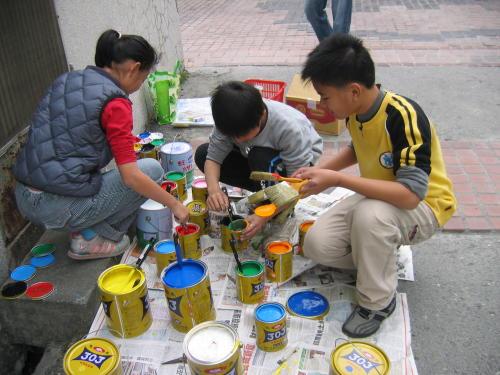
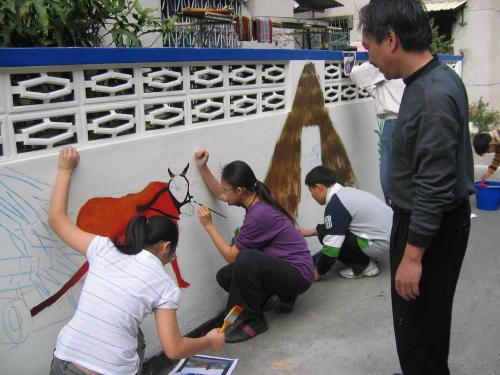
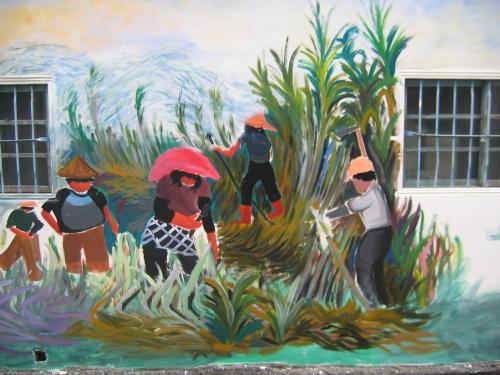
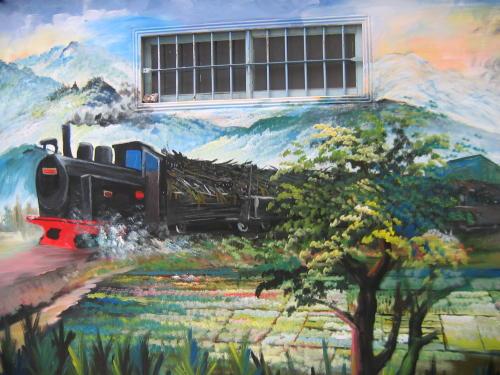
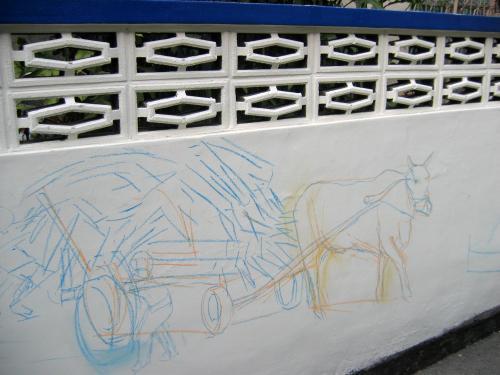
Some of the students at the Hudong Elementary School are working on a huge art project. They are painting several large murals in different areas of the school. When finished, it will really make the school look a lot better.
The theme of the project is the sugarcane industry in Taiwan. The paintings, some of which are already completed, portray different scenes, like the harvesting and shipping of sugarcane. Sugarcane played a major role in the development of Taiwan and the industry was chosen for this project because of it.
The first picture completed was of a family of farmers working in the field. They are busy cutting down the lush sugarcane crop that surrounds them. The life-sized depiction really makes you feel like you are there toiling alongside the people as they work. Once work on the project was well underway it began to receive a lot of attention. Parents and other community members were coming to the school just to check out the murals. People were surprised at the enormity of the works and by the quality of them as well.
The second picture really seemed to fascinate people. Its portrayal of an old steam engine hauling a load of sugarcane across the undeniably Taiwanese landscape is very impressive. A lone tree in the foreground adds so much depth to the painting that some people have actually reached out to touch the painting, almost as if they thought that it was three-dimensional.
Preliminary work on a third painting is currently underway. Mr. Chi Chi-Yuan (紀棋元), the local art teacher and mastermind behind the project, has already roughed out the basic shapes and designs. It will be of an ox pulling a cart loaded down with sugarcane. As with the other murals, the students will flesh out the painting under Mr. Chi's expert watch. But after so many hours of working on the project already, most of the students don’t need more than a little advice here or there.
Mr. Chi's teaching has really helped the students with mixing paint. On the first mural, paints had to be mixed and remixed again and again until the colors were just right. But now, on the third painting, the students have got the hang it. This ambitious undertaking will really benefit every one. The students involved receive invaluable experience working on large paintings and the school gets a much-needed facelift. Perhaps the biggest benefit though, is in keeping a part of Taiwan's colorful past alive. Future generations will be able to look at the paintings and wonder what it was like to live in a time when sugarcane was a huge part of Taiwan’s culture. Those days may be long gone, but if a few students see the paintings and are curious enough to ask some questions, the stories of the sugarcane and the little trains that transported it will live on forever.
Words & Phrases · 生字及片語
Quick Check · 小測驗
1. Why was the sugarcane industry chosen as the theme of the mural project?
2. What does the second mural depict?
3. How has the students' painting ability changed since they started the project?
Unit 3: Shaving
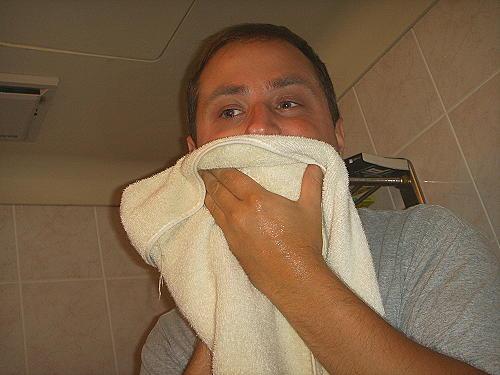
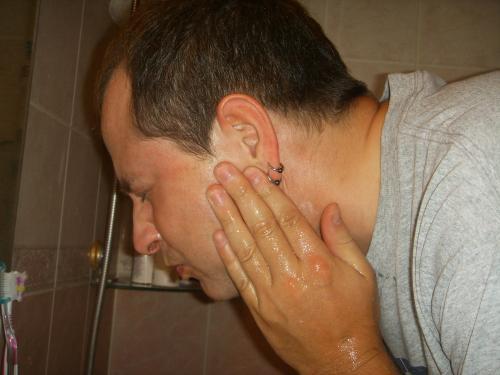
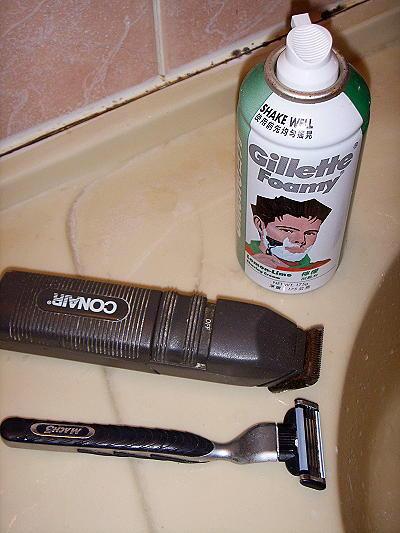
When I was boy, I thought shaving would be so much fun. Whenever my father shaved, I would stand beside the sink and watch. It seemed very exciting at the time. Sometimes I would even pretend that I was shaving by lathering up my face with soap and using a toy razor to shave it off. The joys of shaving have long since ceased. What used to look so fun is now just a pain in the butt. I should shave every day, and it would be much easier if I did, but I usually wait till the stubble gets unbearably itchy. If I am really lazy and it gets too long, I need to use the beard trimmer before the razor. The trimmer clips the whiskers down to a shave-able length. Skipping this process makes for a bit of a painful shave. Dragging a razor across a long beard pulls on the hair more than it cuts it and is not at all comfortable. Not to mention that the blades clog up very quickly with longer whiskers. Basically my shaving bag consists of three things: shaving gel, a rechargeable beard trimmer and a razor. Although the picture shows shaving cream, I usually use gel because it gives a much closer and smoother shave. Other than this, all I need to shave is water and I mirror. I usually shave after showering as the pores in your skin expand with the hot water. This will help you to get a closer shave and to allow the razor to drag easily across the skin. If I don't have time to shower first, I will at least give my face a good washing to remove any dirt and oil and use a hot towel to open up the pores.
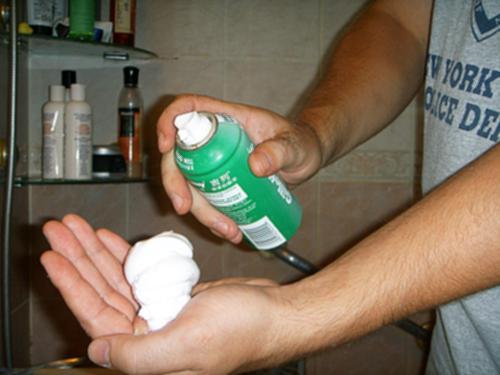
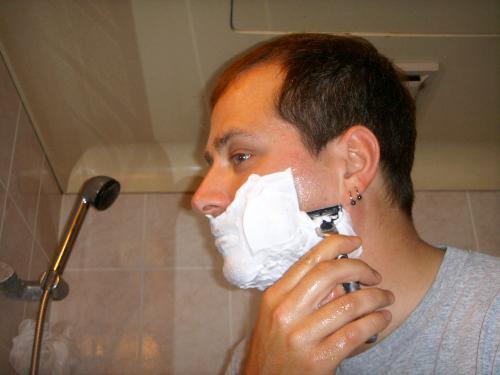
With shaving gel, you only need to put a tiny bit in your palm because when you lather the gel on your face, it will expand and turn white. Gel also acts as a lubricant for the razor, reducing friction and making the shave more comfortable. With shaving cream you need to be a lot more liberal. If you use too little, it will dry up on your face and you may have to reapply. You should apply the gel or cream only to the areas that need to be shaved to prevent waste. For me this means pretty much everything below my eyes and above my chest.
To start shaving, first dip your razor in hot running water, but not too hot or you may burn yourself on the metal blade. Next slowly pull your razor in a downward motion, following the grain of the hair. You should stop after every stroke to rinse the razor clean and prevent the blades from clogging with hair. Be careful around your jaw line and chin. Even with modern safety razors you can easily cut yourself. The edges of your lips are especially vulnerable and this is one of the few places that I have ever cut myself while shaving. After ridding your face of the itchy little whiskers, the only thing left to do is to rinse off your face and towel it dry. You can also apply aftershave lotion at this point, but I don't bother unless I haven't shaved in a month or so. I would also recommend that you don't shave before exercising. Whenever I have tried this, I have got a rash due to the aggravated pores being covered with sweat.
The best time to shave is probably in the evening when the air is cool. It also gives your face the night off before being exposed to sweat, oil and sunshine, again. But, having said that, most men shave as a part of their morning ritual. I guess some people prefer the clean-shaven look.
Words & Phrases · 生字及片語
Quick Check · 小測驗
1. Why does the author use a beard trimmer before shaving with a razor when his stubble is very long?
2. What does the author say hot water does to the skin before shaving?
3. How does the author recommend applying shaving gel compared to shaving cream?
Unit 4: Cricket Fighting
I was watching a TV show today that I found very interesting. It was about a man from Sinhua, Taiwan who holds almost iconic status within his community for a very peculiar passion. His passion would eventually take him across the Taiwan Strait to mainland China, the birthplace of this unusual obsession… cricket fighting.
Dating as far back as the Tang Dynasty, the roots of cricket fighting have become deeply embedded in the cultural soil of many Asian countries over the centuries. Long ago it was a pastime of royalty, but as time went by more and more commoners also took part. The sport is still growing today in spite of modern times and new waves for humane treatment of all things living.
Xie Juean, or Ango as he is known by locals, was like many Taiwanese children of his time and often took part in cricket fights with his friends. As time passed, many children outgrew their childhood hobbies, but not Ango. His passion for crickets continued into adulthood and he is now an authority on the subject and even helps with universities around the country with research.
Sinhua owes their status as the cricket capital of Taiwan to Ango. He along with a few close friends organized the first official cricket competition in the small township many years ago. The “sport” took off like wildfire and the annual tournament is still held today with more and more competitors coming from around the island.
Ango’s reputation as a serious, “not to be reckoned with” cricket trainer eventually made its way to mainland China. There an organizer of one of the largest competitions in the world invited Ango to compete. The Chinese wanted to see how good this guy really was.
The invitation was taken very seriously by Ango. He spent months breeding, selecting and training the finest and fiercest of his crickets for the competition. He had no idea what was in store from him in the birthplace of cricket fighting, but he did all he could to prepare.
When Ango finally arrived in Shanghai for the competition, he was blown away. In his homeland of Taiwan, cricket fighting was just a hobby, but here in one of the largest cities in the world, it was big business. There were markets there where you could buy crickets and all the paraphernalia that one might need to raise and look after them. He noticed too that there was a darker side to the sport as he saw many people were betting heavily on cricket matches.
The meeting between Ango and the organizer was a very auspicious occasion. The two were very curious about each other’s practices and tricks of the trade. They spent hours trading information and talking shop.
One thing that the organizer was immediately impressed by was the size of Ango’s crickets. Compared to their Chinese cousins, the Black Dragons, as they are sometimes called, were massive. Though he was in awe of seeing a new type of cricket, he became worried that Ango’s crickets might annihilate his pride and joy, “The General”, as he so lovingly referred to it.
When the time came for the two crickets and their masters to do battle, tension filled the air. No one knew how either cricket would react. The big Taiwanese cricket did have an impressive size advantage, but after the long flight he seemed lethargic. The General though smaller, was from a very aggressive species and often dismembered opponents, but he had never faced one of this proportion.
The two crickets were finally placed in a clear fighting box. Each trainer used his own technique to get his cricket into fighting mode. Finally the gate separating the two was lifted and they went at each other, but when The General saw the size of the Black Dragon he had second thoughts and leapt out of the cage. The Black Dragon chirped victoriously. It was all quite anticlimactic really, but I guess a lot was learned by both parties involved.
After Ango’s stay in China, he returned home. Though there was no actual “fight”, he had learned a lot about traditional Chinese cricket husbandry and combat and was eager to share this information with his friends. He had also gained a new friend from a place where relations with his homeland are often not so good. It was an experience that will probably always be dear to his heart.
Words & Phrases · 生字及片語
Quick Check · 小測驗
1. Why did Ango travel to mainland China?
2. What happened when The General and the Black Dragon were finally placed together to fight?
3. How did Ango's passion for crickets change from childhood to adulthood?
Unit 5: A Bit About Canoeing
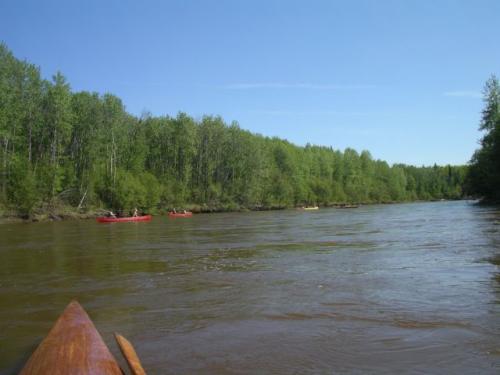
This is the Slave River near Lesser Slave Lake in Alberta, Canada. It is a remote river that cuts and winds it way through the heart of Alberta’s vast boreal forest. Many of the areas you see while boating on the river are only accessible by water and have thus remained untouched and natural. Only the occasional clearing with a house on it blemishes the otherwise picturesque setting.
In the first picture, there are 3 or 4 canoes on the far side of the river. Their occupants drift along with the current looking for wildlife that may be hidden in the dense foliage along the riverbank. Water fowl and song birds are common and can be seen, or at least heard, all around, but larger animals are not so easily found.
The forest here is so thick that it is more likely that animals will see you rather than you seeing them. The animals are also more likely to hear you far in advance of your arrival and wander off before you get a glimpse. Still the canoeists watch, hoping to see some movement which is often the only thing that will give a creature’s hiding spot away.
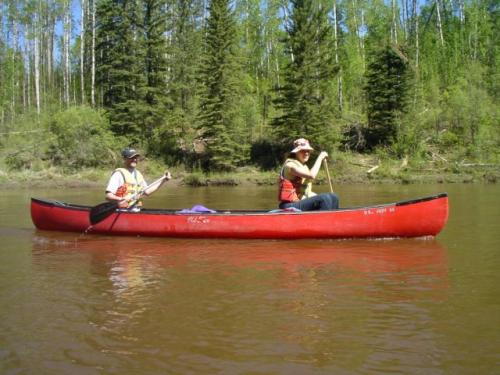
In the second picture, we see a handsome young man and his friend paddling happily down the river. They both wear lifejackets because they can’t swim, but even if one can swim, a lifejacket is a good idea when canoeing because river currents can be strong and difficult to swim against. Only the foolish would dare to tempt fate by canoeing with a lifejacket.
You may notice that the canoeists are paddling on opposite sides of the canoe. This is to keep the boat going straight. If they were both to paddle on the same side, they would end up going around in circles like a one-armed swimmer.
It might sound easy to keep a canoe going in the right direction, but it is more difficult than it looks. You need good communication between the paddlers. The person in the back is like the captain and will usually give some basic commands. He will tell the person in front which side to paddle on and how hard to paddle. He then can modify his own paddling speed and stroke so as to keep them going in the right direction.
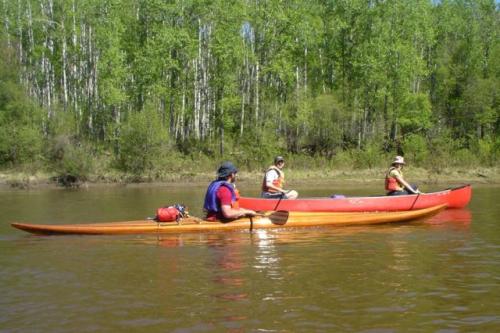
Here another man pulls up alongside the canoe with his kayak. A kayak is similar to a canoe, but the top is enclosed with a circular opening for the kayaker to sit in. This enclosed design makes a kayak far, far easier to right if it is capsized. You don’t even have to get out as long as you can hold your breath and don’t panic. With a simple pull of the paddle, you can roll a kayak over and be upright again whereas with a canoe you have to get under it, push it up out of the water and try to flip it over. The streamlined shape of a kayak also makes it faster and more maneuverable than a canoe.
The paddle used for kayaking is also different than a canoe paddle: it has two blades instead of one. This means that you don’t have to switch sides when paddling, like you would in a canoe, because there is a blade at either end. This design is very good when in faster, more turbulent waters where split-second direction changes to avoid crashing into rocks are crucial.
Words & Phrases · 生字及片語
Quick Check · 小測驗
1. Why has much of the area along the Slave River remained untouched and natural?
2. What is one major advantage of a kayak over a canoe, according to the passage?
3. How do two canoeists keep their canoe moving in a straight line?
*5 lessons in this booklet · 本冊共 5 課。