
← MCC Teaching Library · 英文教材庫
Advanced Reading · Book 3 · 高級閱讀
Advanced Reading — 第三冊
Each lesson: picture → read the text (human recording) → words & phrases → quick quiz.
每課:看圖 → 讀文章(真人朗讀)→ 生字片語 → 小測驗。
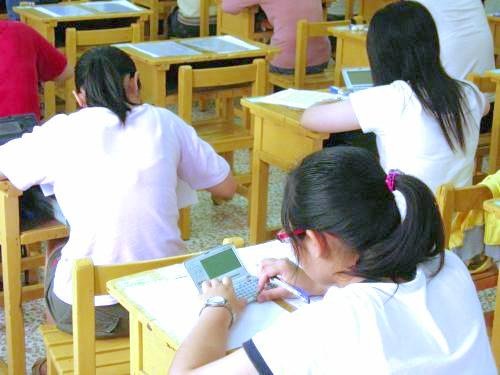
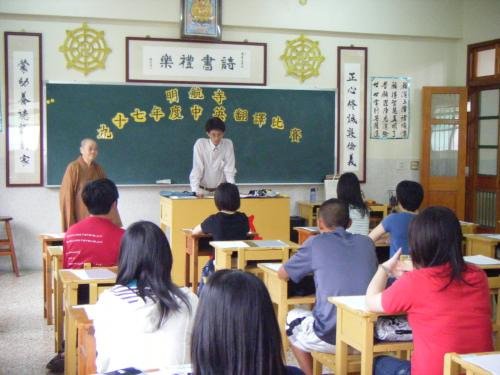
The Ming Harng Temple is at it again, promoting education and language through a little friendly competition. Compared to previous competitions, this contest was a lot tougher. It involved not only writing in English, but also translating Chinese into English, which is no easy task even for someone fluent in both languages. In spite of the difficulty, a lot of students still submitted an entry in the hope of walking away on top.
The goal of the contest was to encourage students to improve their English/Chinese translation skills, as well as to learn about the cultural barriers that exist and regularly hinder the translation process. Translation is undeniably the most complicated part of learning any new language. It isn’t just about substituting one word for another (literal translation) and making sure the grammar is correct; it’s about trying to convey thoughts and ideas clearly that often do not cross cultural borders so easily. I guess if it were easy, the terms “language barrier” and “lost in translation” would never have been coined.
To start off with, 10 questions were posted on Ming Harng’s website. Any high school student who wanted to enter had to answer these ten questions. Their answers were then looked at and the top 30 were invited to come out to the contest where they would have a chance to win some cash. 2,000 NT was up for grabs for the victor, 1,000 NT for the runner-up, 1,000 NT for third for the following 6 places.
The main event took place on April 20th, 2008, in one of the classrooms at the beautiful and spacious Ming Harng Temple. Directed by Mr. Luke Lin, a generous group of volunteers organized the affair and made sure everything ran smoothly. It was a lot of work, but everyone pitched in with the registration and other formalities. A thank you should go out to everyone who donated his or her time and energy to such a wonderful cause.
After introducing the abbess of the monastery, whose generosity made it possible to hold the competition at the temple, the organizer of the contest explained the rules to the contestants and what they were to do. They would each be given a sheet with 7 Chinese paragraphs on it. Each paragraph was then to be translated into English to the best of their ability. Dictionaries and pocket translators were allowed, but notebook computers were not. Once the 7 paragraphs were translated, the students then had to write a brief composition regarding their thoughts on the difficulties of translation.
During the competition, you could have heard a pin drop. The only sounds in the classroom were off pencils and pens scratching away on the paper and the footsteps of a few volunteers as they monitored the students’ progress. Competitors diligently went about the assignment. With only 1 hour to finish, they had no time for anything other than to focus on the task at hand.
When Luke announced the allotted time was up, everyone reluctantly put down his or her writing instrument. Some of the students were relieved that it was finally over, but others clearly wished they had more time to finish. Regardless, a volunteer then collected the papers. They would be judged at a later date because each paper would have to be read over by a panel of judges, which would take a considerable amount of time.
All in all, the event was a big success. The students enjoyed the challenge of the competition and got the chance to meet some new friends. The organizing committee did its part by exposing the students to the translation process, where they inevitably learned the difficulties inherent in expressing ideas in another language. A big thanks to everyone involved in making the event possible.
Words & Phrases · 生字及片語
Full teaching audio · 完整教學音檔
Quick Check · 小測驗
1. Why was this year's Ming Harng translation contest harder than previous competitions?
2. What did the top 30 finalists have to do during the main event at the temple?
3. How were the tools contestants could use during the competition restricted?
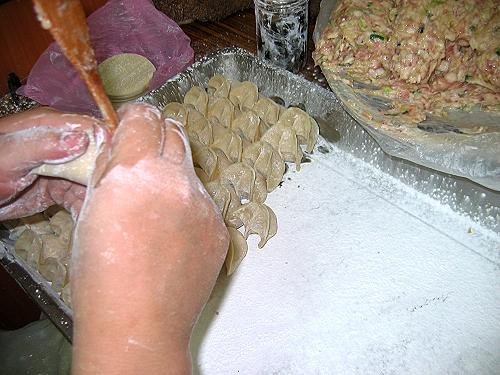
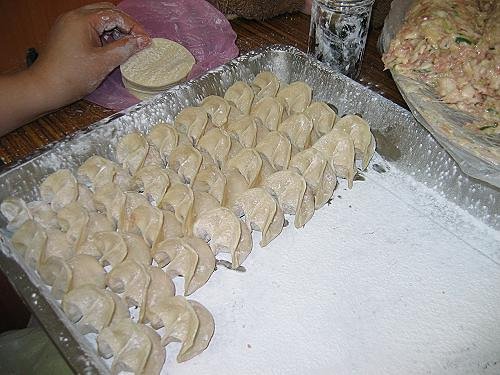
The simple yet versatile dumpling. They are, arguably, Asia’s greatest gift to the culinary world. They can be a snack or a fast meal all wrapped up in a neat, little, flavorful package. There are few foods in the world that can compare.
The availability of dumplings serves as a testament to their popularity here in Taiwan. Street vendors selling traditional dumplings can be found on almost every street in every town and city. Each stand’s dumpling seems to have a different taste. Some of the recipes used are very traditional and have been handed down generation to generation through the family remaining relatively unchanged for generations. More daring cooks may experiment with all sorts of new ingredients trying to create a new and more delicious variety of dumpling to call their own, but they may be hard pressed to improve on the tried and true recipes.
A run-of-the-mill dumpling usually contains ground meat, green onion, leek, cabbage, and some spices. Basic recipes will contain most of the above with some variations. Twists on the original recipe include shrimp dumplings, vegetarian dumplings, and, my favorite, the kimchee dumpling.
Making dumplings from scratch is not a difficult job, unless you want to make the wrappers from scratch, too. Mix the aforementioned ingredients in a large bowl until they are well blended. Next, take a single wrapper, or skin, in the palm of your hand and spoon on a dollop of filling. Wet the edge of the wrapper with some water, using your finger—the water helps the skin to adhere to itself. Now, wrap the skin around the filling and gently press the edges together to make sure they seal.
There are a variety of ways to cook dumplings. They can be boiled, steamed, fried, or served in soup. You can also freeze them to enjoy at a later date. Soy sauce mixed with some chilis is often used as a dipping sauce to give them a nice, spicy flavor. You can also add your favorite hot sauce for a little kick.
Dumplings are quite similar to another food you may have heard of—the pierogi. Pierogies are synonymous with the Ukraine. Their ease of cooking and great taste have spread them all across the globe. The pastry used for the pierogi wrapper is a little different from the dumpling wrapper, as it is thicker and doughier. Pierogies are usually stuffed with, potato, cottage cheese, onion, and sometimes bacon, then boiled or fried to cook and served with sour cream.
The straightforward way in which dumplings are made and the simple ingredients required have helped to feed millions of hungry mouths for centuries. Their rich taste and convenience will assure that they will be around for many centuries to come. They are bite-sized wonders.
Words & Phrases · 生字及片語
Full teaching audio · 完整教學音檔
Quick Check · 小測驗
1. Why does the passage suggest that dumplings are popular throughout Taiwan?
2. What does a run-of-the-mill dumpling usually contain, according to the passage?
3. How does the passage explain that the wrapper is sealed when making a dumpling by hand?
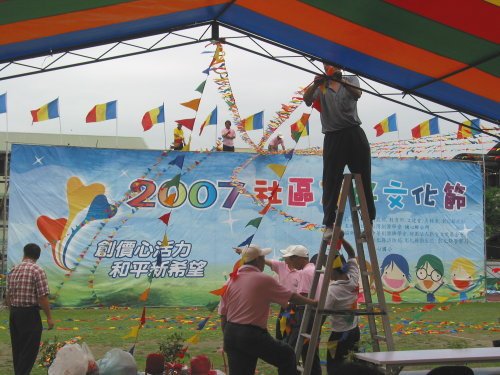
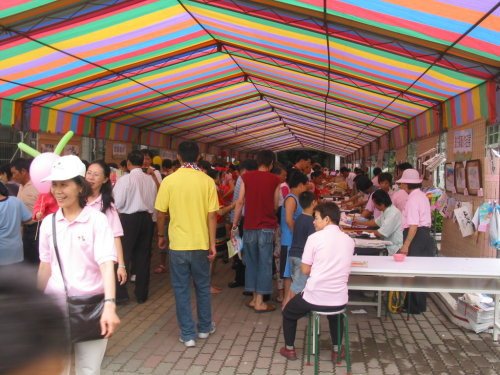
If you are outside in Taiwan, whether for a day or just for a couple of hours, you are almost certain to see one of these tents at some point. The handy portable structures make convenient shelters from the sun and the rain for many occasions. Most often they are used for events where groups of people may gather for extended periods of time.
Tents are basically any structure with a portable frame and some kind of covering. Traditionally they would have been peaked, and still are for the most part, but sometimes rounded tops are used. The types we normally see here in Taiwan consist of a metal frame and a tarpaulin enclosure.
There are companies that rent these large tents as their business. They have many different sizes and colors of tents available for different occasions. Also provided with the rental is a crew of laborers who will come out and set it up for you. For these experienced workers, setting up a tent takes no time at all. Once they have put the tent up, the renter can then decorate the inside as they see fit for their function. When finished, the crew will also take down the structure.
Some events that they are used for include funerals, weddings, religious gatherings and fairs. For funerals a tent is set up in front of the deceased home. Unfortunately, Taiwan homes rarely, if ever, have a front yard. This means that the tents are set up on the side of or even in the middle of the street. If you are driving along a street where a funeral tent is set up, show some respect for the departed and the grieving friends and relatives by slowing down and making the area a little safer. Situations like this are not ideal, but in a country where land is at a shortage we have to make do.
In areas where tourists are known to congregate, you will often find long wall-less tents with vendors set up underneath. Various local peddlers will set up shop in such locations during peak season to take advantage of the multitudes of people. Some sell snacks, fruits and cold drinks, while others might have trinkets, clothing and local artwork to peddle. It is a cheap alternative to building an entire store and offers the owner the luxury of being able to move the shop if the location is not so good.
Tents have been used throughout human history for many of the same reasons we use them for today, and the primary function has always been to give us shelter from the elements. Though their function has not changed, materials to make them has. Primitive tents would have been constructed from leaves and sticks. Later in some areas of the world, tanned animal hides, rigid wooden poles and rope would have made much more stable refuges. In modern times aluminum or graphite poles have been used to create much larger tents that earlier materials would not have been able to do. As well, light synthetic materials such as nylon, tarpaulin and heavy plastics have allowed animals to breathe a little easier knowing that they aren’t going to become part of a wall.
The next time you have a family reunion or your local group has a fundraiser, you could consider renting a tent. It will keep the sun off everyone and, if it starts to rain, it will ensure that the show will go on. Word to the wise, though: tents don’t make good shelters from typhoons!
Words & Phrases · 生字及片語
Full teaching audio · 完整教學音檔
Quick Check · 小測驗
1. According to the passage, why are portable tents especially useful in Taiwan for events like funerals?
2. What materials does the passage say were used to make more stable tents before modern materials like aluminum and graphite were available?
3. How do vendors in tourist areas benefit from setting up shop under long wall-less tents, according to the passage?
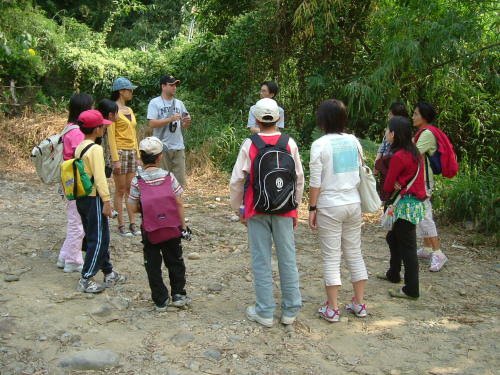
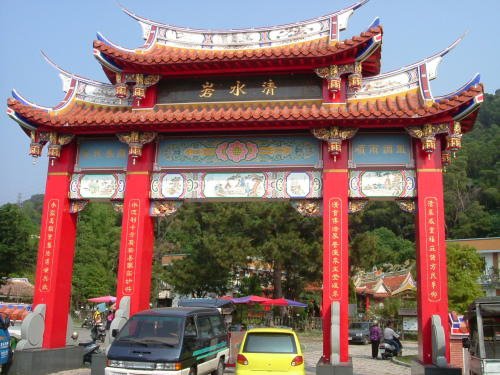
Last fall, Luke and I took a group of children on a nature walk to the Chinshui Forest Park in Shetou. The first goal of our excursion was to promote environmental awareness. The second goal was to expose the children to English in a non-classroom setting. In any event, we were certainly going to get some fresh air and exercise.
To aid us in our nature hunt, some of us carried binoculars to search the canopy for birds. Others carried cameras to document the flora and fauna they found to be interesting, while a few were content to just look on and were happy to see the children enjoying themselves so much.
As we walked up the steep paved bike path, we searched for insects, reptiles, small mammals and anything else that might hide in the tangled undergrowth. Without question, the creatures we found to be the most abundant, or at least the most visible, were spiders. They were everywhere and some of them were enormous. We quickly dubbed the area “Spider Mountain” because of this.
When we encountered any of the arachnids, I wanted to instill in the children a sense of awe for the eight-legged creatures and not a sense of fear. We approached them with respect and tried to observe them passively. The last thing we wanted was to disturb the spiders or to make them scared of us. Observing and talking about what we saw was one way for us to understand them more and fear them less. By the way the children were curiously looking at the spiders, I think any fear they had of them had vanished.
The walk was tough going for some of us─me, more specifically. Keeping up with the energetic children as they effortlessly hiked up the long steep path was more of an undertaking than I had anticipated. When we finally did reach the top, we took a much-deserved break. It was a difficult climb, but it was very rewarding to see the children excitedly exploring their natural world. The English aspect of the trip really seemed to be secondary. Although it was one of our goals, we didn’t have to dwell on it too much because if I spoke, it was going to be in English. To understand and observe nature, it is not important what language you speak. It is only important to open yourself up to your surroundings and to listen to the unspoken language of nature.
Every time I go on a nature walk, I learn something, whether about the world or myself. It is my belief that the more I know about nature, and its beings, the less I need to fear it. Today, all of us were able to learn, to share our experiences, and, hopefully, to understand nature and our connection to it more. The fact that we were able to do it together made it even more special.
Words & Phrases · 生字及片語
Full teaching audio · 完整教學音檔
Quick Check · 小測驗
1. Why did the group nickname the area "Spider Mountain"?
2. What did the author want to instill in the children when they encountered spiders?
3. How did the author come to feel about the English-language goal of the trip by the end of the walk?
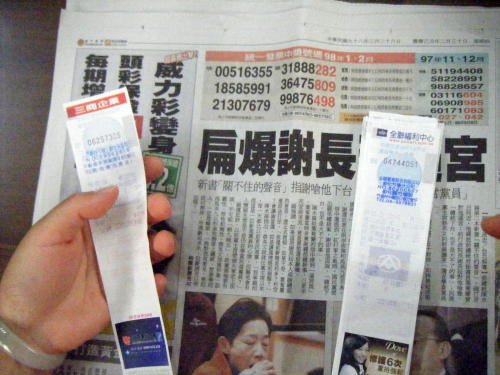
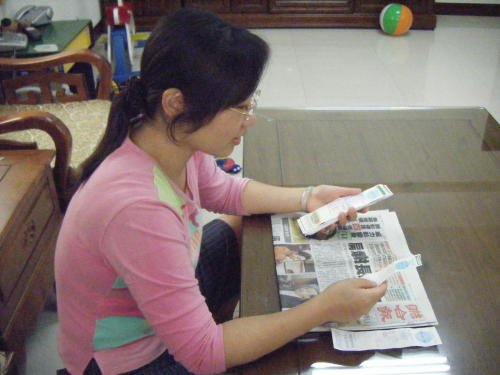
Many years ago Taiwan had a lot of trouble with illegitimate businesses operating under the radar. These seedy operations made it difficult for legitimate companies to compete in the market. By operating unlicensed, the businesses were able to evade taxes and the owners were able to line their pockets with consumer dollars that would normally feed back into the economy. It also made it impossible for the government to enforce any sort of quality control, health standards or other rules that law-abiding businesses had to adhere to. Again, this tilted the market in favor of those who chose unfair tactics to gain an edge.
In retaliation the government implemented a very clever system. Though it didn’t involve directly policing illegitimate businesses, it did persuade many places to become legit. This was done by introducing the lottery receipt. Receipts from businesses would now be required to have a random lottery number printed on them. This helped the government to regain some control.
These receipts are no different than a lottery ticket that you have to pay for at the store, as each ticket gives the holder a chance to win big bucks. The key to the whole system is that consumers would now consciously seek out businesses where they would get a receipt and, thus, a chance to win big bucks. This decision to opt for a receipt was inadvertently policing illegitimate businesses because consumers could now demand a receipt or report violators who weren’t giving them out. It was also taking money out of the pockets of the criminals and putting it in the hands of companies that operated within the law.
As the years have passed, more and more businesses have joined the ranks of the moral. In the past it may have been easier to operate however you wanted, but not anymore. Though such businesses still exist and are still trying to beat the system by cheating honest people, they are in much smaller numbers and far easier for the government to track down. Hopefully in the future, other methods will be found to completely eliminate the underhanded business practices and give consumers faith that they aren’t going to be ripped off.
Words & Phrases · 生字及片語
Full teaching audio · 完整教學音檔
Quick Check · 小測驗
1. Why did illegitimate businesses have an advantage over legitimate ones before the lottery receipt system?
2. What did the government require businesses to print on their receipts?
3. How did the lottery receipt system encourage consumers to help police illegitimate businesses?
I have always wanted to try the pottery wheel ever since I was a small boy. Occasionally I would go to a ceramics class, where they had one, with my mother. For some reason I became immediately fascinated with it. I begged and begged for her to let me try it, but she said I was too small. The opportunity would not present itself again for a long, long time in a place far, far away.
The notion of doing pottery never really crossed my mind again until recently when I decided I wanted to do something more creative in my spare time. Since leaving Canada behind, along with many of my favorite pastimes, there has been somewhat of a void in my life. The time seemed right to look for something here to help get my mind off work and alleviate some stress. Maybe pottery was the answer.
I had told a few people that I was looking into taking a pottery class of some kind and asked if they knew of a place where I could do this. Luckily, Luke had a friend who knew of someone near Beido who gave public classes. I eagerly told him to set a date and time for us to attend. Susan, Sophia, Julie and May would also come along.
Mr. and Mrs. Wang kindly greeted us upon arrival. They led us to their quaint little workshop in the backyard where the class was to be held. Inside they offered us tea and some snacks while we got acquainted and checked out some of their work. Their hospitality was above and beyond the call of duty to say the least.
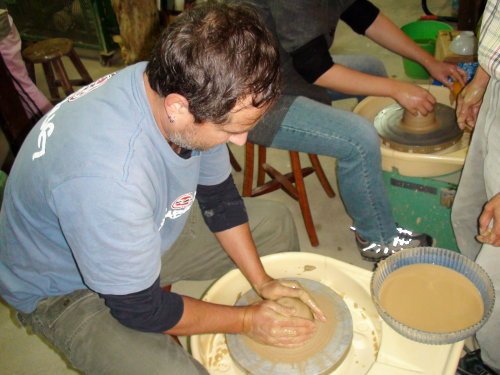
I was the first to take a turn on the potter’s wheel. Mr. Wang gave me a short demonstration to give me a general idea of what to do. He pointed at various parts of the machine and Luke translated as best he could, given that he was new to this as well. Mr. Wang was more than patient with the language barrier and waited for Luke to explain to me what was going on.
Finally, it was time to take the helm. The moment I’d waited for since I was a young boy. The clay first needed to be worked by hand to soften it up a bit and it also had to be formed into a cone-like shape that was flat on the bottom where it would sit securely on the wheel. I did a poor job with this part, so my teacher helped out to get me going.
Once the clay was stuck in the center of the wheel, I gently pressed down on the foot pedal at the base of the wheel that controlled the speed of rotation, and the wheel began to turn. I wet my hands in the water then cupped them around the mound of clay. It was still quite hard and so it had to be worked over with wet hands to make it more pliable, but it couldn’t be too soft either or it wouldn’t hold its shape. By pushing my hands slowly together on the sides of the mound, it rose up and by pushing downward on the top the clay widened. I did this several times before my teacher said the clay was ready.
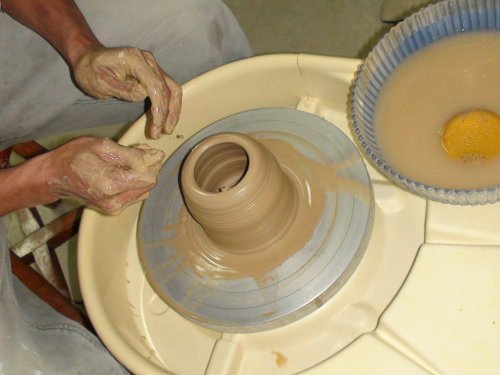
The next step was to use my thumbs to create a hole in the center of the clay. As my thumbs pressed gently into the soft clay, the hole gradually took shape. It was important that the hole didn’t go too deep or the pot that I was making would have a hole in the base—a lesson that Luke would later learn the hard way. While my thumbs enlarged the cavity, the heel of my hands held the clay centered and prevented the base from expanding out as I pushed down; in effect, your hands are like a free-form mold.
With the hole in the center now about the size I wanted, I began to contour the sides and the pot began to take form. Really, you just move your hands little by little, applying delicate pressure as you go, and the wheel will do most of the work for you. The only concern is that the sides are not too thin or the pot will begin to wobble and twist out of shape. It may also collapse under its own weight. Conversely, you don’t want them to be too thick either or heavier than necessary.
Using one hand on the inside, I pushed gently outward toward my other hand that cupped the outside. The pot began to take a bulbous shape that I found quite pleasing. As I worked my way up, I used my index finger and thumb to create a lip on the top of the pot. Then I made sure that everything was nice, smooth and uniform.
The boss took over again and made some finishing touches. Then he used a piece of wire to cut the pot off the wheel. Unfortunately, that was all I could do for now as the pot would have to sit and dry before anything else could be done to it. Tomorrow Mr. Wang could use a special tool to cut excess clay off the bottom so that it would be perfectly flat. Then it would have to sit for a week or two in order to be dry enough to put into the kiln. Though I wanted to see the finished product as soon as possible, I would be forced to wait.
I had almost forgot about the pot when Luke brought the finished piece to the cram school where we both work. I quickly opened the box and removed the protective wrapping to have a look. It was beautiful. It was everything I had dreamt it would be, even more. Ok, maybe it wasn’t worth putting into an art gallery, but in my eyes it was the most beautiful pot in the world and something I had waited a long, long time to make. Thank you to Mr. and Mrs. Wang for helping me to fulfill a lifelong ambition.
Words & Phrases · 生字及片語
Full teaching audio · 完整教學音檔
Quick Check · 小測驗
1. Why did the narrator not get to try the potter's wheel as a small boy?
2. What was the narrator supposed to do first with his thumbs after the clay was centered on the wheel?
3. How did the narrator finally get to see the finished pot?
*6 lessons in this booklet · 本冊共 6 課。